Author: techology

  • It’s Just As Hard At The Top…

    It’s Just As Hard At The Top As It Is At The Bottom

    If you are stuck in your new copywriting career and not sure what to do next, remember this one idea, it is just as hard at the top as it is at the bottom. Olympians still need trainers. Pros need coaches and mentors, not because they are weak, but because they want to grow without guessing.

    That is why it is easy to poke holes in other people’s work, and so hard to do it for ourselves. We all need help getting out of their own way. You are not alone.

    Why Top And Bottom Feel The Same

    Beginners and veterans wrestle with many of the same challenges, only the stakes change. The feelings do not go away, they just get more subtle.

    ChallengeAt the BottomAt the Top
    ClarityWhat should I write, who am I writing forWhich hill to die on, how to focus a complex project
    ConfidenceImposter syndrome on first clientPressure to outperform your last win, fear of plateau
    FeedbackNo trusted reviewers, random opinionsToo much deference, not enough honest critique
    ProcessNo repeatable systemSystems get bloated, hard to change what once worked
    Visibility of blind spotsUnknown unknowns everywhereSuccess hides flaws, small leaks become expensive

    Why Coaches, Mentors, And Trainers Matter

    Even elite performers use guidance to see what they cannot see. In copy, that extra set of eyes saves time, reputation, and money.

    RolePrimary FocusHow They Help Copywriters
    TrainerSkills and repsDaily drills, headline sprints, voice exercises, briefs to sharpen speed
    CoachProcess and mindsetGoal setting, debriefs, overcoming blocks, structuring your workflow
    MentorDirection and judgmentPositioning, pricing, client selection, career moves, pattern recognition

    Quick Case Studies

    New Copywriter, First Clients

    Sam had two small retainers and constant doubt. A mentor reviewed one landing page per week, pointed out muddled value props, and gave a three point checklist. Within six weeks, Sam shipped faster, raised rates by 20 percent, and booked a larger retainer.

    Seasoned Pro, Flat Results

    Taylor had big wins, then a dry spell. A coach audited Taylor’s research process, found shallow voice-of-customer notes, and added a simple interview script. The next launch used richer language, beat the control by 18 percent, and restored momentum.

    Getting Out Of Your Own Way

    You do not need to wait for perfect confidence, you need a small plan. Try this simple loop.

    1. Define the job, write a one sentence brief that states audience, promise, and outcome.
    2. Draft fast, set a 30 minute timer, write without editing.
    3. Park it, take a ten minute break, then return as an editor.
    4. Edit with a checklist, clarity, proof, offer, CTA, objections, next step.
    5. Get outside eyes, ask for one thing to cut, one thing to clarify, one thing to strengthen.

    What To Post When You Ask For Help

    Specific requests get specific answers. Use this structure when you post in a group or to a mentor.

    • Goal, what success looks like, click, reply, booked call
    • Audience, who they are and what they care about
    • Draft, paste the copy or link to the doc
    • Constraints, word count, tone, brand rules
    • Targeted questions, which headline is clearer, where does it drag

    Template you can copy, Audience, goal, draft link, two questions. Thank you.

    Self Coaching Prompts

    When you cannot get live feedback, use these quick prompts.

    • What is the one job of this piece, did I do only that
    • Where would a skeptical reader stop, did I handle that moment
    • What is the most concrete proof here, can I make it more specific
    • If I had to cut 25 percent, what goes, what actually gets better
    • What is the next click, reply, or step, is it obvious and easy

    Simple Weekly Practice Plan

    Consistency beats intensity. Keep it light and steady.

    • Monday, 10 headline reps from customer language
    • Wednesday, one page teardown of a control you admire
    • Friday, ship one micro asset, email, hook ideas, bullets
    • Weekend, one mentor touchpoint, a question, a review, or a short call

    You Are Not Alone

    Ask any questions you like in the Facebook Science of Copywriting group. I will help if I can, and many others will too. Keep moving, keep asking, keep practicing.

  • How To Get A Page Featured As A Google Featured Snippet

    Featured snippets are the holy grail of massive free exposure of your brand. But it doesn’t necessarily correlate in free traffic to your website. That’s because the best featured snippets provide the answer right there in the search results – no need for anyone to go exploring any further.

    And when you factor in Google’s AI algorithms, it makes sense that they’re going to easily detect if the user got a satisfactory answer (in theory it should result in a near 100% bounce rate and no further searches). But what if the searcher clicks the link and then stays on the page for a further few minutes, and perhaps goes further into the site? Well, it’s another signal that this result was a top result for Google.

    And there’s nothing that makes Google happier than a happy searcher – except perhaps for a happy advertiser. So how do you get featured in the SERPS? Here’s what Google says about featured snippets and what you can and cannot do (and here’s the link to the original

    featured snippet information

    page):

    ~~~~~~~ START OF GOOGLE FEATURED SNIPPET INFORMATION PAGE ~~~~~~~

    Featured snippets in search

    When a user asks a question in Google Search, we might show a search result in a special featured snippet block at the top of the search results page. This featured snippet block includes a summary of the answer, extracted from a webpage, plus a link to the page, the page title and URL. A featured snippet might look something like this on the page:

    Featured snippet in search results

    Where does the answer summary come from?

    The summary is a snippet extracted programmatically from what a visitor sees on your web page. What’s different with a featured snippet is that it is enhanced to draw user attention on the results page. When we recognize that a query asks a question, we programmatically detect pages that answer the user’s question, and display a top result as a featured snippet in the search results.

    Like all search results, featured snippets reflect the views or opinion of the site from which we extract the snippet, not that of Google. We are always working to improve our ability to detect the most useful snippet, so the results you see may change over time. You can provide feedback on any Featured Snippet by clicking the “Give Feedback” link at the bottom of the box.

    Opting out of featured snippets

    You can opt out of featured snippets by preventing snippets on your page using the <meta name="googlebot" content="nosnippet"> tag on your page. This will remove all snippets on your page, including those in regular search results.

    How can I mark my page as a featured snippet?

    You can’t. Google programmatically determines that a page contains a likely answer to the user’s question, and displays the result as a featured snippet.

    Is this part of Knowledge Graph?

    No, this is a normal search result, emphasized with special layout.

    ~~~~~~~END OF GOOGLE FEATURED SNIPPET INFORMATION PAGE ~~~~~~~

    I actually love this. It means no one can game the system without actually producing a well written, well thought out, and complete answer to any search query.

    And that means we’re all ‘forced’ to write better answers to people’s problems.

    When it comes to SEO, it’s not Search Engine Optimisation these days, but Secret Engine Optimisation.

    Google are the gatekeepers, and that means they HAVE to ensure we’re delivered the best results they can find or their paying customers (the advertisers) will disappear and everyone loses.

    So How Can You Help Yourself Get Featured?

    There is a broad depth of featured snippet answer styles. The most common are lists – eg. “101 ways to feature in Google snippets” (and no I haven’t written that particular answer yet, but please do go ahead and do it yourself if you fancy it – because if it’s any good, you will get featured – take that as a bonus way).

    Recipes are also good. Although it’s a kind of list (ie. ingredients), it’s also a step by step (the recipe itself), which tells us that step by step answers are also good.

    What else is featured?

    Locations. If someone searches for something like “size of London”, you’ll either get a Google hash of information or a page with that information displayed (how that works is, as always, a secret held only by Google).

    People. Again, this tends to result in a Google mashup rather than someone’s dedicated page.

    Careers. This is a good featured snippet category. It’s often obscured by a full quota of ads, but they’re usually the first organic result you come across.

    Hobbies. Search for “how to make jewelry” and, unless it’s changed since I wrote this, you’ll come across a featured snippet box called “People also ask…”. Google seem to do this either because the question is ambiguous – ie. they’re not quite sure which snippet to show, or it’s just helpful to show similar questions.

    Transport. Route planning, timetables, road works and other transport searches seem to be missing snippets right now (or maybe I’m not searching hard enough), so that might be an angle to try.

    Facts and Figures. You’ll find it hard to get featured in this area as Google have it pretty much covered already using their own mash up of tools – all very useful too. For example, enter “calculator” and the first result is an interactive calculator. What’s not to like about that? It gives the searcher what they want (of course, if you were to enter “buy calculator”, then you’re going to get the Google shopping snippet).

    Google Featured Snippets Summary

    I love featured snippets. It improves the searcher’s experience and keeps them coming back for more. The downside is that the more sophisticated Google becomes, the less user pages will show up (it could end up being a better version of Wikipedia I guess – but the downside is that less freely given information would be forthcoming on the web, and we’d all lose out in the end).

    Google will always be walking a narrow path between taking and giving, but I’m pretty sure they’ve known that for a long time.

    So right now, there’s only one way to get featered as a snippet at the top of Google and that is to deliver the best possible content you can, and ideally include a bunch of bullet points and/or step by step steps so Google’s AI machine can make sense of it.


  • Secret Engine Optimisation or Search Engine Optimisation (SEO explained)


    Secret Engine Optimisation or Search Engine Optimisation

    Although everyone knows that SEO stands for Search Engine Optimisation, for most people, it means SECRET Engine Optimisation. And that is because, quite frankly, no one knows how Google truly works except Google, otherwise everyone would be gaming the system and it would rapidly become useless. This is fine and good, but how can you influence Google in a Google SEO approved way, and thereby reveal the SECRET?

    It is actually quite simple.

    You use Google itself to reveal which pages it thinks a certain keyphrase or title should show in the search results. Then you reverse engineer those articles, the ones that appear on page 1 of the results, so you can start to get an idea of the semantics involved. From there you can create your own version of the page using that data as your primary research source.

    Why This Works, Without Guesswork

    Google’s first page already tells you what the algorithm believes satisfies searchers. You can learn intent, structure, length, media types, and common questions, just by reading the results. You are not copying, you are understanding patterns, then creating something better for your audience.

    • Use the SERP as a living brief, it reflects real user behavior.
    • Spot consistent themes, questions, and entities that appear across top results.
    • Build a page that answers the query more completely, clearly, and credibly.

    Step by Step: Reverse Engineer the SERP

    1) Start with a clear keyphrase

    • Choose the phrase you want to rank for, note synonyms and close variants.
    • Search in a clean browser profile or incognito to reduce personalization.
    • Scan the whole first page, including People Also Ask and related searches.

    2) Capture what Google is favoring

    • Content type, guides, product pages, lists, comparisons, videos.
    • Format, H2s and H3s used, presence of FAQs, tables, checklists.
    • Depth, estimated word count, detail level, use of images and charts.
    • Authority cues, expert authors, citations, original data, last updated dates.
    • On page signals, title tags, meta descriptions, internal links, schema.

    3) Understand search intent

    • Informational, learn something, how to, definitions, guides.
    • Navigational, find a brand or site, login, pricing page.
    • Transactional, buy now, best, discount, near me with purchase intent.
    • Commercial research, compare, versus, reviews, alternatives.
    • Local, services near a location, opening times, directions.

    4) Map the SERP clues to your plan

    SERP clueWhat it tells youHow to respond
    Featured snippetGoogle prefers concise, structured answersAdd a clear 40 to 60 word answer box, use a descriptive H2
    People Also AskCommon follow up questions and entitiesAnswer top PAA questions with their own H3s and short answers
    Video carouselVisual walk throughs are valuedEmbed a short original video, or add step images and GIFs
    Listicles rankingComparison or curation intentCreate a well structured list with criteria and scoring
    Local packProximity mattersUse local terms, add NAP details, build a Google Business Profile

    5) Extract semantics and entities

    • Collect phrases from titles, H2s, and PAA, they signal key subtopics.
    • Check related searches at the bottom of the SERP for variations.
    • Note recurring entities, brands, tools, locations, measurements, standards.

    6) Outline, then write something better

    • Draft an outline that covers the shared essentials, then adds unique value.
    • Include examples, data, checklists, and visuals your competitors missed.
    • Use plain language, short paragraphs, and clear headings for scanning.

    Real World Example

    Query: “how to prune lavender”

    • Intent, informational, seasonal timing and step by step care.
    • Top results, how to guides with images, some video carousels, PAA questions about timing.
    • Semantics, varieties, tools, timing, avoiding woody growth, aftercare.

    Build your page with a quick answer box, a tool list, a seasonal schedule, step photos or a short video, and an FAQ tackling PAA like “Can I prune in winter” and “How far back can I cut.” Add a printable checklist and a simple mistakes to avoid section to outperform the basics.

    Make It Credible, Not Just Optimised

    • Show experience, include your own examples, photos, or data.
    • Cite respected sources where relevant, standards, research, government guides.
    • Add author byline, date, and an update note when you improve the page.

    On Page Essentials

    • Title tag, include the main phrase naturally, keep it compelling and under about 60 characters.
    • Meta description, summarise the benefit, aim for a natural call to action.
    • H1 and H2s, mirror the intent and cover key subtopics cleanly.
    • URL, short and descriptive, use hyphens, avoid stop words where possible.
    • Images, descriptive alt text, compress for speed, add captions if helpful.
    • Internal links, connect to related guides and category pages with clear anchor text.
    • Schema, consider FAQPage, HowTo, Product, or Article when relevant.

    Case Study Snapshot

    A local pest control company targeted “wasp nest removal price.” Page 1 showed price guides, FAQs, and local intent. They created a transparent pricing page with a cost table, photos of typical nests, an embedded booking form, and an FAQ answering PAA questions like “Do wasps return to old nests.” Within six weeks, impressions and clicks for the term, plus close variants, grew in Google Search Console, and calls from the page doubled.

    Measure, Iterate, Improve

    • Publish and request indexing in Google Search Console.
    • Track queries, average position, CTR, and pages that now link to yours.
    • Refresh the page if you see impressions without clicks, refine title and description.
    • Add internal links from relevant older posts to boost discovery and context.

    Common Pitfalls to Avoid

    • Copying structures without adding value, aim to be the best answer on the page.
    • Keyword stuffing, write naturally and cover topics thoroughly.
    • Ignoring speed and UX, slow pages and cluttered layouts hurt engagement.
    • Thin pages competing for the same term, consolidate and build one strong resource.

    Quick Checklist

    • Identify intent and top content types on page 1.
    • List common subtopics, entities, and PAA questions.
    • Create a skimmable outline with real examples and visuals.
    • Optimise on page elements and add helpful schema when relevant.
    • Link internally, publish, and monitor Search Console for feedback.

    Build on a Solid Foundation

    If you are starting from scratch, structure and speed matter as much as content quality. A clean information architecture, fast hosting, and an accessible design give your pages a fair shot. Use your SERP research to plan categories and pillar pages before you write.


  • Goodbye Whiteboard Hello Funnelytics

    The higher the price of the sale, the longer it takes to get it.

    This is universally true both offline and online.

    No one dips into their wallet and pulls out a thousand pounds on a whim.

    And no one knows for sure how many marketing “touches” it really takes to convert someone from a prospect into a customer.

    Sales Funnel Creation

    Which is why sales funnels were created.

    It’s what we do here at ProofMEDIA every day.

    We think deeply about the route from prospect to customer, but we don’t rely on some random event to happen to get people on track.

    Instead we carefully nurture people through the reasons they need whatever it is you sell, and we overcome all objections on the way.

    To do that effectively, we used to use large whiteboards, then take a photo for our records (so we could resurrect it and tweak it if necessary in the future).

    No More Whiteboards

    But now we have Funnelytics.

    Funnelytics is an online app that let’s us create complete funnels, mapping people from their very first encounter with us (which may be from Facebook, an ad of some sort, an email, or simply a visit to our website).

    Once we’ve got them started, we step them through the process using various means that make sense for them.

    Quizzes, Email Sequences, Webinars, Optin Forms

    These can be highly interactive quizzes or carefully thought through email sequences (with clever self selection branching to ensure they get what they want – which also reduces unsubscribe rates).

    They can also include webinar signups, optin forms, video sequences and a whole host of other media depending on what works best.

    And of course being ProofMEDIA, we track every step of the way so we can tweak conversion rates of each step to ensure maximum ROI.

    Create Your Own Funnels with Funnelytics

    We offer this service to all our clients, but you don’t need to be a client to make use of our preferred tool – Funnelytics, because we’re also a Certified Funnelytics Partner and you can get it yourself and create your own funnels simply by going here. – where you can get the mapping part for FREE – FOREVER.

    If you’d like to discuss your ideas and needs direct, then please do book up a strategy session with us over here.

  • Wet Rooms For The Elderly and Less Abled

    Introduction: The Benefits of Wet Rooms for the Elderly and Less Abled

    Wet rooms and walk-in showers offer a safer, more comfortable way for individuals with reduced mobility or specific medical needs to maintain personal hygiene with greater independence. This inclusive bathroom solution has become increasingly popular as people focus on staying in their own homes for as long as possible. In this guide, we’ll explore what makes wet rooms ideal for the elderly and less abled, important features to consider, and practical tips for creating the safest and most user-friendly wet room possible.

    What Is a Wet Room?

    A wet room is a fully waterproofed bathroom where the shower area is integrated with the rest of the room, with no need for separate enclosures or abrupt floor levels. Unlike traditional showers, which are commonly enclosed and set above the floor on a tray or step, wet rooms provide a completely level, open-plan floor space. This design makes them exceptionally accessible and minimizes tripping hazards — a major benefit for the elderly and those with mobility issues, such as osteoarthritis.

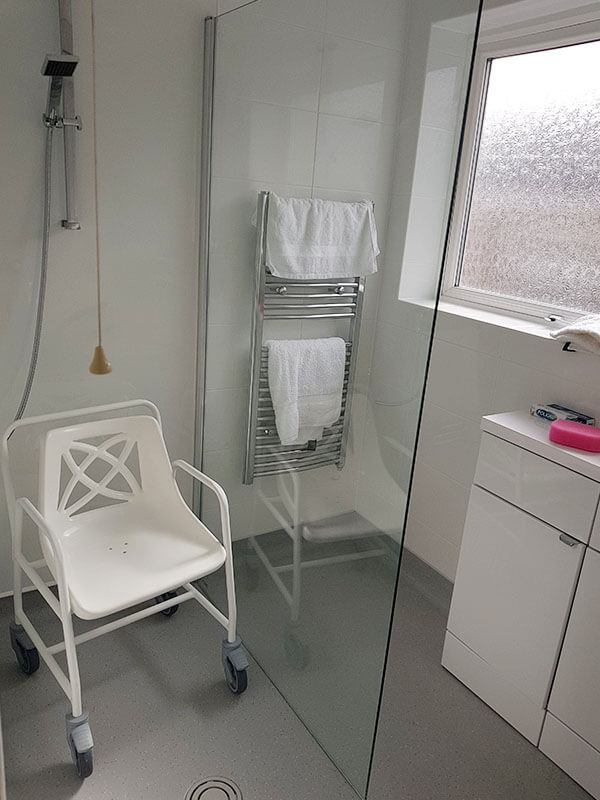
    image of chair for the elderly in wetroom

    Key Features of a Wet Room

    • Level access: No steps or raised trays; the shower is flush with the floor.
    • Integrated drainage: The floor is gently sloped to guide water towards a discreet drain.
    • Open or partially enclosed design: Showers may use a simple curtain or glass screen based on user needs.
    • Efficient ventilation: Prevents moisture buildup and ensures quick drying.
    FeatureTraditional ShowerWet Room
    Floor LevelRaised tray, step neededCompletely level access
    EnclosureEnclosed cubicle/glass wallsOpen-plan, optional curtain/screens
    DrainageVia shower trayIntegrated floor drain
    AccessibilityLimited, often not wheelchair-friendlyVery high, suitable for wheelchairs

    Safety and Accessibility: Reducing Hazards

    One of the most important aspects of a wet room is its inherent safety. The level floor dramatically reduces the risk of trips and falls, which is especially crucial for people with brittle bones or balance issues. A few other safety features to consider include:

    • Slip-resistant flooring: Essential to prevent falls on wet surfaces.
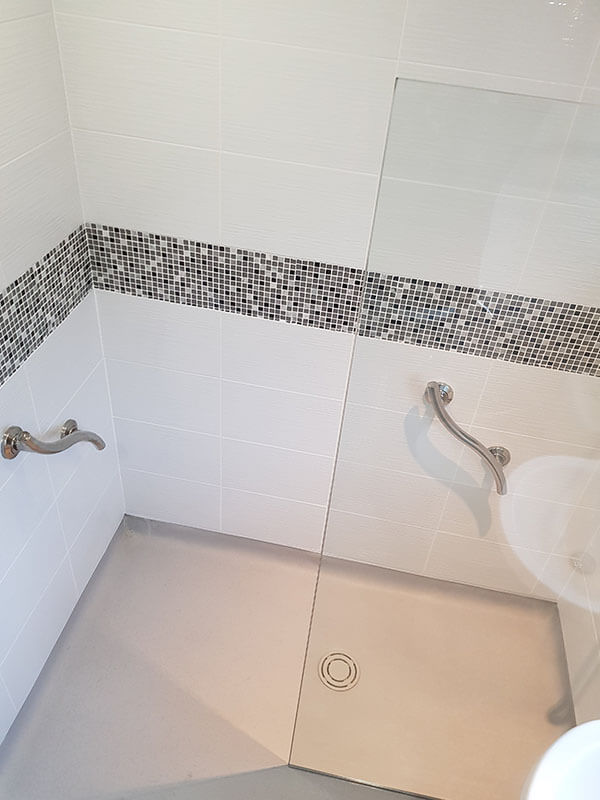
    • Hand and grab rails: Provides added support and can be fixed or fold away depending on user preference.
    • Shower seating: Options include fold-away or permanent seats. Choosing the right type depends on the user’s strength and mobility. For example, someone with arthritis in their hands may struggle with a folding design and benefit more from a fixed chair.
    image of open wetroom with easy wheelchair access

    Accessibility for Wheelchair Users

    Wet rooms can be tailored with ample clear floor space to allow easy wheelchair maneuvering. Wide doorways and handle placements should be considered during planning. For people who use wheelchairs daily, a wet room can significantly improve self-sufficiency and quality of life.

    Practical Example

    Consider Mrs. Jenkins, an 82-year-old with limited mobility after a hip replacement. She had difficulty entering her old enclosed shower due to a 15cm step. After installing a wet room with a level floor, fixed shower seat, and easy-reach grab rails, she regained the confidence and ability to wash independently, significantly improving her wellbeing.

    Design Considerations for Wet Rooms

    Designing a wet room requires thoughtful planning to ensure it meets the user’s needs both in terms of safety and comfort as well as aesthetics. Some key elements include:

    • Assessing available space — is the room large enough to accommodate a wheelchair or carer if needed?
    • Placing fixtures so that there’s enough room to move freely.
    • Selecting materials that are not just functional but also visually appealing.
    • Ensuring all plumbing and electrical work is completed to the highest standard for reliability and safety.
    image of large grab rails for the less abled using a wetroom

    Flexible and Bespoke Wet Room Installations

    Wet rooms should be custom-fitted to each user’s needs. Features can be adjusted to accommodate different abilities and preferences — from the choice of screens and drainage arrangement to the style of handrails and seating. Engaging a company that listens and adapts the design to your requirements is critical.

    Case Study: EA Mobility

    EA Mobility understands the importance of tailored solutions. The founder, Kevin Carvell, was inspired by adapting a bathroom for his own father. Now, his company helps many clients, ensuring every installation takes into account both the medical and personal needs of the user, resulting in practical and life-enhancing bathroom spaces.

    Wet Room Features That Enhance Independence

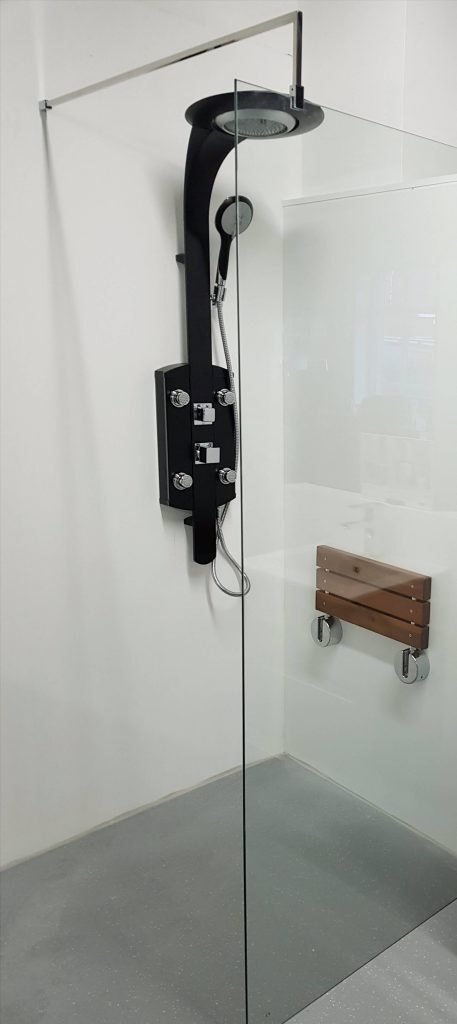
    image a electric shower and foldable seating for a shower room

    • Easy-to-use controls: Large, clearly labeled shower temperature and flow controls minimize confusion and risk.
    • Built-in seating: Ensures the elderly or less abled can rest safely while showering if standing is difficult.
    • Well-lit spaces: Good lighting reduces the risk of missteps.
    • Accessible storage: Placing shelves or baskets within reach prevents overreaching and potential falls.

    Modern Style and Property Value

    Beyond functionality, wet rooms are recognized for their sleek, contemporary design. An open-plan appearance and integrated features contribute not only to a safer bathroom but also enhance the overall look of your home. Many homeowners find that a well-installed wet room can add property value as it appeals to both current needs and future-proofing considerations.

    Comparing Wet Rooms and Traditional Bathrooms

    AspectTraditional BathroomWet Room
    AccessibilityOften limited for less abled usersDesigned for all abilities
    MaintenanceMore corners and fixtures to cleanSimpler design, easier to maintain
    Resale AppealStandard, often less future-proofIncreasingly in demand, especially with aging population

    Wet Room Installation: What to Expect

    image of walk in shower with no steps

    Wet rooms can be installed in a variety of spaces — from large bathrooms to compact areas or even as stylish ensuite conversions from smaller rooms. Innovations in waterproofing and drainage now allow installation on any floor of the home, not just the ground floor. While adding a wet room to upper storeys can increase costs due to necessary plumbing adaptations and water pressure concerns, the result is a versatile and accessible bathing space wherever you need it.

    Important Steps in Wet Room Installation

    1. Comprehensive needs assessment with the user and installer
    2. Detailed room measurement and waterproofing planning
    3. Selection of non-slip flooring and suitable drainage solutions
    4. Decisions on seating, grab rails, and fixtures
    5. Professional installation with a focus on safety and accessibility
    image of grab rails and wetroom drainage

    Under-Floor Heating and Luxury Touches

    Adding under-floor heating is a popular choice, ensuring the space is not only practical but also welcoming and warm. Whether you’re converting a small windowless room or creating a stunning ensuite, design flexibility means it’s possible to combine safety with modern luxury.

    Choosing a Wet Room Installer

    Due diligence is vital when selecting an installation company. Look for providers — like EA Mobility — with a proven track record and a personalized approach. A company should:

    • Take time to assess the client’s specific needs and preferences
    • Be able to manage everything from plumbing and electrics to tiling
    • Offer aftercare and support following installation
    • Demonstrate expertise with at least 20 years’ experience

    Client Experience Example

    A local couple in their seventies approached EA Mobility to convert a cramped, slippery bathroom into a safe wet room suitable for the husband’s new wheelchair. After a thorough consultation, the team delivered a space with wide-door access, a fixed shower seat, and bespoke grab rails at personalized heights, giving the couple peace of mind and renewed independence.

    Conclusion: Transforming Lives with Accessible Wet Rooms

    A well-designed wet room restores dignity and independence, allowing elderly or less able individuals to continue living safely in their own homes. Besides improved accessibility, wet rooms provide style, ease of use, and enhanced property value. With professional guidance and attention to your specific requirements, creating a safe, beautiful wet room is possible in almost any home.

    For expert advice or to discuss your needs, contact EA Mobility on 0800 955 8810

  • How To Build An Affordable Search Engine Optimised Website From Scratch

    This guide will show you every step to build an affordable website from scratch including ensuring it is optimised according to Google guidelines in the best possible way. We start with choosing a good domain name, then look at hosting options, content management systems, the content itself, and finally what you can do in terms of extending the page content including the addition of video.

    Step 1 Choose a Domain

    1. Choose a domain name

    This could be your name (eg. JaneJones.com), or your Locality + Industry (eg. LondonAccountant.co.uk) – or vice versa, or your name + Industry (eg.

    JonesAccountants.co.uk), or something random (eg. JazzyJazz.com)

    2. Choose a domain extension

    a) Always choose .com if your market is global (or if you want to punch above your weight)

    b) Choose local (eg. .co.uk) if you serve a local or national market

    c) Avoid any other extension unless the .com and .co.uk are not available

    3. Check if your domain is free

    I suggest purchasing your domain and hosting from Krystal and enter our referral code PROOFMEDIA for a small discount. More about this in step 4.

    Step 2 Choose a Framework

    There’s no point in reinventing the wheel, so go for WordPress. Don’t listen to anyone who tells you it’s not secure, or it’s only for bloggers, or it’s rubbish, or any of a myriad of other reasons.

    WordPress is the most widely used website framework on the planet – by a very long way (according to W3Techs, over 43% of all websites are now run using WordPress).

    Some of the world’s most respected brands run on WordPress including: BBC America, Sony Music, Bloomberg, Variety, Beyonce, Sweden (yes the country’s official website runs on WordPress), Walt Disney, Microsoft News and on and on.

    Do you think those brands would use it if it were insecure or ‘just a blog’?

    Step 3 Choose a Theme

    WordPress has more plugins than there are stars in the universe (not quite true, but sometimes it feels like it). But if you choose the right theme, you can forget most of those plugins. The theme will have the most important ones built in.

    Here at ProofMEDIA we use the standard WordPress Twenty Twenty Five theme. You don’t need anything fancy.

    Step 4 Choose Where to Host your Site

    You will need somewhere to host your site. The choice is massive. There are hosting companies everywhere.

    Hundreds of thousands of them. But most are simply affiliates and resellers.

    The key thing about your hosting company is access to your files, email, DNS, server speed, server reliability, backups and support.

    We’ve used most of the main ones and now stick to just one: KRYSTAL Hosting. Use the referral code PROOFMEDIA and you’ll get a small discount too.

    Krystal are a British company established in 2002 and remain a 100% private company (unlike many others who have been bought out by the huge dinosaur hosting companies).

    They care about our planet, so use 100% renewable energy and plant trees on behalf of each customer. They also only use solid state drives (vital for speed and reliability) and free SSL (security).

    Step 5 Connect Everything Together

    Now you have your domain name, framework, theme and hosting, it’s time to link it all together (don’t worry, we’ll cover email a little later).

    NOTE: If you buy your domain name and hosting through the same company, eg. Krystal, you’ll find this a LOT easier to administrate.

    1. Login to your hosting account and get your DNS server names

    2. Login to your domain name registrar and point your domain to the new DNS

    3. Go back to your hosting account and use cPanel to install WordPress on your domain (choose the https:// option – eg. https://yourdomain.com)

    4. Wait up to 72 hours for the DNS to update across the web (test by entering your domain name into a browser – if it comes up, you’re ready to go)

    5. Upload and install your theme into your WordPress installation

    Step 6 Setup your Domain Email

    1. Login to your hosting account, click on the Email option and add a new professional email address for your domain (eg. jane@yourdomain.com)

    2. Set up a Google Gmail account if you haven’t got one. This is by far the easiest way to handle multiple email addresses from a single place.

    3. Inside your hosting account, click on the Email Forwarding option and forward your new email addresses to your Gmail account (Gmail allows you to reply to any email address direct from your Gmail account using the same address the email was sent to – eg. if an email was sent to jane@domain.com, when you reply to it from Gmail, the reply will show it’s from jane@domain.com)

    4. Repeat the process until you have all the new email addresses you need

    Step 7 Install Plugins

    1. Make sure your site is GDPR compliant – use plugins from the ProofMEDIA Professional Plugin Suite for self-hosted WordPress websites.

    2. Install the Google Sitekit WordPress plugin.

    Step 8 Content Architecture Part 1

    Does the architecture of your site really matter? No, not really. Google and the rest of the search engines DO NOT show sites.

    They show PAGES. So creating specific pages that answer specific problems is the way to go. People share pages not websites (you can’t share a website anyway – only a link to a page).

    However, thinking about how your site links together WILL improve your visitors experience. And it will improve your position as an expert in the market if it’s done well.

    NOTE: Don’t be confused by terms like POSTS and PAGES in WordPress. Posts are meant for blog entries (i.e. time bound), Pages are meant for long-term pages such as contact or about us. Either way, they are all ‘pages’ as far as search engines are concerned.

    Step 9 Content Architecture Part 2

    Here’s how to think about and design your website architecture.

    Break down your industry into its most important topics. Write a landing page summarising each topic. Then write a series of sub pages for each topic, breaking down each topic into as much detail as possible.

    Link each of those sub pages to the topic summary page, and link each of those main topic pages to your main navigation menu. This lets anyone explore your site in detail starting at the home page.

    It also breaks down your site very nicely for search engines, especially if you include an XML sitemap (which you absolutely should do).

    Step 10 Content Architecture Part 3

    You have a choice with your subpage linking. You can either include a menu on the topic page that links to every sub page, or you can link each subpage to the next page – and have a START HERE link on the main topic page.

    There’s advantages to both depending on your marketing strategy, but if in doubt, use a menu so the reader can choose what they want to do next.

    And just to finish up, there’s nothing wrong with adopting both approaches – use a menu AND a START HERE link.

    Step 11 Create Standard Pages

    As well as figuring out a good architecture, you’re going to need a set of standard pages. These are the pages search engines AND your visitors will expect to see.

    Contact Us page – how to contact – include map if people can visit you

    About Us/Me page – who you are and why you do what you do

    Privacy Policy – vital if you want to stay safe legally

    Cookie Policy – this can be included in your privacy policy, but is vital for GDPR compliance

    Disclaimer – important protection for yourself if you sell things from your site including acting as an affiliate or distributor

    Terms and Conditions – similar to a disclaimer but just as important

    Step 12 Create Your Home Page

    There are two types of home page:

    A) Content Page

    B) Hero Page

    The purpose of SEO is NOT to rank your home page UNLESS your home page IS the business and you have no other pages other than the standard ones such as a privacy policy etc.

    This is because search engines rank PAGES not SITES. And the best pages are almost always interior pages that solve specific problems.

    Step 13A The CONTENT style Home Page

    Think of your home page as you would the Contents page of a book. It is the place people visit to get an overview of what you do together with links to go deeper into any area they are interested in. The vast majority of sites are built this way.

    The key to making it work is to identify your different audience segments and include an easy way for each visitor to choose the area they’re interested in.

    Making the home page look like the menu of an app is how to do this. Paying a professional designer to make it look good will more than pay for itself. User experience determines success (great graphics, easy navigation and clear descriptions).

    Step 13B The HERO style Home Page

    If you major on one single thing, then positioning what you do on your home page is the best way to go.

    A hero home page SHOULD be optimised for search engines. Unlike the Content Home Page, it IS the way you want people to find you.

    A hero home page tells a story that aligns perfectly with its ideal prospect. It’s the first touch point on the site and the starting place to build long term trust.

    Hero home pages lead people deeper into the journey using carefully placed links that ensure they arrive at the right destination for them.

    Step 14 Use Images

    Words start and end wars. They are the single most important element on any page. They are how we communicate.

    But a picture adds even more.

    Step 15 Use Video

    Video uses text. Either as captions or as audio narrative.

    YouTube is growing faster than ever. We are built to watch moving things. They get our attention because back in the day, this ability was our only defense against attack by sabre tooth tigers.

    Every article you write can be turned into a video and placed on your YouTube channel.

    And that video can then be embedded back in your article giving Google and your readers a choice of how to find and consume your content.

    Step 16 Page Word Count Matters

    An article on rocket science will need to be the size of an encyclopedia if it wants to answer the question “what is rocket science” fully.

    Search engines are discovering that serving up half baked attempts at articles do them (and their readers) no favours – even if there are 100,000 links pointing to a page.

    If the top 10 results for rocket science show that the average page length is 5,000 words, then you’d better make sure that not only do you have more words, but that they’re better words too.

    Step 17 Research your Articles

    When we’re searching for answers on Google (and who isn’t) we want the right result to our search.

    We want a single point of reference that tells us precisely what we want to know, or where we can get further information.

    Every search engine, and every searcher knows and wants this. And every search engine and searcher knows it can only happen if the search engine is clever enough to pick out wheat from the chaff.

    Every article worthy of being found must be based on the best research there is. And right now the best source is Google (which includes YouTube).

    Step 18 Share your Work

    Everything you create for your site can be repurposed and shared on social media channels. Use small snippets (text/image) with a link back to each article.

    Slice and share everything you have on every possible channel there is.

  • Do You Start With A Top Down Or Bottom Up Approach To Business?

    The First Choice: Top Down or Bottom Up?

    In business, and everything else, we often face the same first decision. Do you start with a top down approach or a bottom up approach?

    Top down means you begin with a finished thing in mind and reverse engineer it. Bottom up means you start with more or less nothing, then build by doing.

    Before you read on, think of something you want to do, and choose your approach. Spend a couple of seconds on it, do not overthink it. Top down or bottom up. Do it now…

    Time passes…

    Made it? Good. Write it down.

    What Each Approach Really Means

    Top Down, Start With the Blueprint

    If you are a top down person, you build a complete blueprint first. You map the steps, sequence work, and try to reduce uncertainty up front. It feels safe and clear, which is great, until reality disagrees with your plan.

    Bottom Up, Start With the Smallest Next Step

    If you are a bottom up person, you start straight away. You take the simplest next step, then another, and learn as you go. You do what works, stop what does not, then repeat.

    A Note From Nature

    Look at the observable universe, it is bottom up. Things happen because of their environment, then those things shape the environment in return. There is no obvious purpose to any of it other than survival.

    Top Down vs Bottom Up, At a Glance

    AspectTop DownBottom Up
    DefinitionStart with the end state, plan backwardStart with a small action, evolve forward
    Starting PointVision, strategy, full planHypothesis, hunch, quick test
    Speed to ActionSlower to start, faster once alignedImmediate start, momentum builds over time
    Risk ProfileHigher upfront risk if assumptions are wrongLower incremental risk, higher variance in outcomes
    Best WhenRequirements are stable, stakes are highUncertainty is high, learning is the goal
    Common PitfallsAnalysis paralysis, rigid plansRandom walk, lack of focus
    Feedback LoopPeriodic, often slowerContinuous, often faster
    Typical OutputsRoadmaps, specs, KPIsMVPs, experiments, traction signals
    ExamplesEnterprise rollouts, compliance projectsStartup discovery, new channels, prototypes

    When Top Down Shines

    Both approaches work, but context matters. Top down helps when clarity, coordination, and control are essential.

    • High stakes, where failure is costly, for example, safety or compliance work.
    • Clear requirements and stable markets, for example, known customer segments.
    • Complex cross team dependencies, for example, enterprise integrations.
    • Strong brand or regulatory constraints that limit variation.

    Quick Example

    A payments company must meet new regulations by a fixed date. The team drafts the target state, writes a phased plan, maps risks, and executes with checklists. The clarity reduces rework and avoids penalties. The downside? No one can predict the future, we only have possibilities and probabilities, or as Mike Tyson put it: “Everyone has a plan until they get punched in the mouth”

    When Bottom Up Wins

    Bottom up thrives when you need discovery and speed. You learn by shipping, and adjust as signals arrive.

    • Unfamiliar markets or new products with unknown demand.
    • Resource constraints that reward scrappy progress.
    • Rapidly changing conditions where plans expire quickly.
    • Creative work where taste and feedback beat theory.

    Quick Example

    A new SaaS team explores onboarding ideas. They run three lightweight experiments in a week, swap copy, add a tooltip, and change one email. Signups convert 12 percent better, so they double down on the winners.

    What Could Go Wrong, And How To Fix It

    Top Down Pitfalls

    • Over planning, months on slides without shipping.
    • Fragile assumptions that do not match reality.
    • Slow feedback, errors compound unnoticed.

    Top Down Fixes

    • Time box planning, for example, five days, then build.
    • Insert checkpoints, demo weekly to real users.
    • Plan for change, set decision rules for pivots.

    Bottom Up Pitfalls

    • Random busywork, no clear learning goals.
    • Local optimizations that hurt the bigger picture.
    • Endless tinkering without a success definition.

    Bottom Up Fixes

    • Define a simple intent, for example, learn X by date Y.
    • Add guardrails, budget, time, and risk limits.
    • Use kill criteria, stop if metric A does not move by B.

    Try These Simple Playbooks This Week

    7 Day Top Down Sprint

    1. Day 1, draft the end state and non negotiables.
    2. Day 2, list assumptions, tag high risk items.
    3. Day 3, map a simple path, milestones and owners.
    4. Day 4, define one metric that proves progress.
    5. Day 5, run a pre mortem, what would make this fail.
    6. Day 6, compress the plan, remove 25 percent of steps.
    7. Day 7, start execution, demo something small.

    7 Day Bottom Up Sprint

    1. Day 1, pick one bet, define the smallest test.
    2. Day 2, build the cheapest version you can ship.
    3. Day 3, ship to a tiny audience, 10 to 50 people.
    4. Day 4, collect feedback, calls or quick surveys.
    5. Day 5, double down on what worked, cut the rest.
    6. Day 6, run a second micro test based on learning.
    7. Day 7, write a one page recap, keep or kill.

    Hybrid Approaches That Often Work Best

    You do not have to pick a pure style. Many teams blend both to get the upside of each.

    The Barbell

    Protect a small top down core, for example, compliance and brand, then let the rest be bottom up exploration. A fintech team locks risk controls, then experiments weekly on onboarding flows.

    Layered Roadmaps

    Set quarterly outcomes top down, then give teams freedom to choose bottom up experiments. Review outcomes, not tasks, every two weeks.

    Guardrails and Freedom

    Create simple rules, budget, time, metrics, that frame safe experiments. Inside the frame, ship fast and learn.

    Short Case Studies

    1, Product Launch in a New Market

    Top down attempt, the team wrote a 60 page plan, built for four months, and missed the mark. Bottom up switch, they launched a tiny offer to 200 early users, learned pricing and messaging in two weeks, and rebuilt the plan around proven demand.

    2, Local Service Business

    A new bakery considered a full menu and large space. They chose bottom up, opened a pop up on weekends, tested five items, and watched sales. The two best sellers became the core menu, then they scaled with a light top down plan.

    3, Internal Process Change

    An ops team needed to cut ticket time. Instead of a full redesign, they ran three small scripts in one queue, measured impact, and kept the winner. With proof in hand, they rolled out a top down standard across all teams.

    How To Choose Today

    Both approaches work, but top down fails most of the time, whereas bottom up succeeds, or nothing would exist. Your context will tilt the odds.

    • Uncertainty high, pick bottom up first, then add light structure.
    • Requirements fixed and stakes high, pick top down first, then add fast feedback.
    • Limited budget and time, favor bottom up, short tests with clear kill rules.
    • Many dependencies and compliance, favor top down, plus weekly demos.

    Metrics To Keep You Honest

    • For top down, milestone hit rate, variance from plan, time to first user feedback.
    • For bottom up, number of tests shipped, percent of tests that move the target metric, time to learning.
    • For both, outcome metrics over activity, revenue, retention, cycle time, customer satisfaction.

    Reflect And Commit

    Are you fundamentally a top down or bottom up person, and how has that worked out for you. Look at your choice from the start of this article.

    Made it? Good. Write it down, share it with your team, and pick one small action you will take this week to move forward.

  • How To Handle Objections Before They Happen

    The Importance of Handling Objections Proactively

    Objections are often seen as obstacles in sales and business interactions, but they are truly valuable opportunities for connection and growth. Addressing objections before they arise can transform potential barriers into trust-building moments. Understanding the best ways to respond sets you apart in both one-on-one and written communications.

    Three Common Approaches to Handling Objections

    When faced with objections, businesses typically respond in one of three ways. Each approach impacts the outcome and relationship differently:

    • Ignore and Carry On Talking (Option A): Many professionals brush past objections or hope they will just disappear. This often leads to frustration for the potential customer and missed opportunities for meaningful engagement.
    • Defend Aggressively (Option B): Some respond by immediately justifying or defending their product or service. While this can show confidence, it often results in a combative exchange, making the client feel unheard.
    • Listen and Discover (Option C): The most effective approach is to listen carefully, ask clarifying questions, and aim to understand the real concern behind the objection. This not only fosters trust but also provides a chance to address root issues.
    MethodTypical OutcomeClient Perception
    IgnoreObjections persist or escalateFeels dismissed or undervalued
    DefendCreates tension, may cause withdrawalFeels challenged or unappreciated
    Listen & DiscoverObjections clarified and addressedFeels understood and respected

    Why Most Businesses Fall Short

    Despite knowing the importance of addressing objections, many businesses, even at the highest levels, default to ignoring or defensively tackling challenges. From participating in leading trade shows to networking events, it becomes clear that true listening is rare.

    This gap presents a major opportunity. Companies that actively listen to clients gain valuable insights that can fuel better marketing, sales, and customer support.

    Proactive Objection Handling in Written Content

    Written communication, like website copy or emails, offers a unique chance to handle objections before they even arise. When you truly understand your audience, you can anticipate and address the main concerns directly within your content.

    • Know Your Audience: Research your audience’s common hesitations around your product or service.
    • Lead with Answers: If your audience is sensitive to price, address value and cost upfront.
    • Build Credibility: Use testimonials, case studies, and data to support your answers.

    Example: Tackling Price Objections in Sales Copy

    For instance, suppose your potential clients often object to price. Instead of waiting for the question, you can highlight how your product saves time and money, or compare value to competitors right at the beginning. Consider using a table to illustrate cost savings:

    ServiceAnnual CostFeatures Included
    Your Solution£800Priority Support, Free Updates
    Competitor A£1,200Standard Support, Paid Updates

    Using such comparisons helps make your offer irresistible by preemptively resolving the cost objection.

    Knowledge is a Powerful Commodity

    In today’s market, having deep knowledge of your customer’s objections is a major advantage. Yet, many businesses overlook this. By consistently gathering feedback and tracking objections, you arm yourself with the insights needed to refine your products and communication.

    Whether in-person or through your website, handling objections before they happen ensures your message resonates, builds trust, and sets you apart from competitors who are still playing catch-up.

  • The Strongest Copywriting Anchor On The Planet

    The Strongest Copywriting Anchor On The Planet

    When it comes to copywriting, fairness is a type of anchor that just happens to be the most emotional trigger on the planet. Think about kids, the most common line between siblings is, it is not fair. They shout it at each other, and to anyone in earshot, because fairness hits a nerve fast.

    It makes sense to study fairness and see how it can be woven into sales copy. Is it fair that someone else is making all that money, owning that brand new car, enjoying a wonderful relationship, or having a peaceful retirement, when your reader is not? When you write for people who feel left out, fairness gives them a reason to act now.

    When combined with a story of injustice, fairness moves people straight into the zone. They pick sides quickly. That means trust. Positioning a business on the right side of any injustice situation does more than win friends, it influences them too. That is how some of the best copy in the world works. When you win people over by fighting injustice, everyone wins.

    Why Fairness Works So Fast

    • It is universal, everyone understands what feels fair or unfair, without a long explanation.
    • It creates instant contrast, a clear before and after that makes the offer feel like relief.
    • It builds identity, readers join the side that restores balance, which increases trust and action.

    The Psychology Behind It

    • Loss aversion, people work harder to avoid being treated unfairly than to gain a small benefit.
    • Social proof, when a community agrees something is unfair, agreement spreads quickly.
    • Moral foundation, fairness ties to our built in sense of justice, reciprocity, and equality.

    How To Weave Fairness Into Your Copy

    Step by Step

    1. Spot the injustice, name the practice, fee, gatekeeper, or status quo that disadvantages your reader.
    2. State the stakes, show what your reader loses each day the unfair situation continues.
    3. Draw the line, make it clear which side you are on, and why your brand refuses the old way.
    4. Present the fair alternative, price, terms, access, or support that restores balance.
    5. Prove it, add receipts, comparisons, policies, testimonials, and guarantees that back the promise.
    6. Invite action, give a simple next step that lets the reader correct the unfairness today.

    Use These Copy Prompts

    • It is not fair that [audience] has to [pain], so here is how we fix it.
    • You should not pay for [wasteful thing] you do not use, pay only for what you need.
    • Why do [big players] get [benefit] while you get [scraps]? Not anymore.
    • The rules were written for them, our plan helps you win on your terms.

    Real World Examples

    Direct to Consumer Pricing

    Claim: Eyeglasses cost a fortune because of middlemen. Solution, buy direct at a fair price. This fairness narrative helped brands like Warby Parker change an entire category by highlighting the old game, then offering a clear fix.

    Everyday Essentials

    Claim: Razor blades are overpriced and locked behind cabinets. Solution, affordable subscriptions delivered to your door. Dollar Shave Club used humor plus fairness to paint the old system as silly and unfair, then made the switch easy.

    Finance Access

    Claim: Wall Street gets the tools, Main Street gets the leftovers. Solution, open access and zero commission trading. Fairness framed the mission, which pulled in a large crowd of first time investors who felt locked out.

    Service Terms

    Claim: Gyms trap you with long contracts and hidden fees. Solution, cancel any time, no hidden fees, no surprises. The fairness angle makes the policy the product, not just a fine print detail.

    Where Fairness Shows Up In Offers

    • Pricing, transparent breakdowns, no add ons, price match or lifetime pricing.
    • Access, no waitlists for insiders, equal features on all plans, or fair limits.
    • Support, real humans, honest SLAs, proactive refunds if things go wrong.
    • Policies, easy cancellations, straightforward returns, clear warranties.
    • Outcomes, pay for results, milestone based fees, or try before you commit.

    Fairness vs Other Common Anchors

    AnchorCore triggerWhen it shinesRisk to watchSample line
    FairnessJustice, reciprocityBroken markets, hidden fees, uneven accessCan turn preachy if not specificIt is not fair that you pay for seats you do not use
    ScarcityFOMO, urgencyLimited runs, seasonal offersOveruse erodes trustOnly 9 spots left for early adopters
    AuthorityCredibility, expertiseTechnical products, regulated fieldsCan feel elitistTrusted by 3,000 clinics nationwide
    BelongingIdentity, communityTribes, movements, membershipsCan exclude outsidersJoin 10,000 makers building in public

    Mini Case Sketches

    • SaaS seats, A project tool stopped charging per user and moved to usage based tiers. Their headline, Stop paying for empty seats. Trials and conversions rose, and churn fell as customers felt the pricing was finally fair.
    • Education, A course introduced a pay what you can scholarship pool funded by full price buyers. The copy framed it as fair access for motivated learners. Applications increased and community referrals improved.
    • Ecommerce, A coffee brand revealed farm gate prices and profit splits. The page said, Farmers first, profits second. AOV grew as customers chose higher priced, clearly fair options.

    Ethical Guardrails

    • Be specific, attack practices, not people. Name the policy, not a competitor by name.
    • Substantiate, keep screenshots, receipts, and third party sources for claims.
    • Offer balance, acknowledge trade offs, then show how your approach stays fair.
    • Stay truthful, fairness is powerful, misuse backfires and damages trust fast.

    Simple Fairness Story Template

    Three Act Structure

    1. Injustice, Explain the old world, who loses, and how it feels on a daily basis.
    2. Turning point, Reveal the moment you said enough, and the principle you stand on.
    3. Resolution, Show the policy, product, or plan that restores fairness, then invite action.

    Fill In Example

    For years, [audience] had to put up with [unfair practice], which cost them [time, money, control]. We built [solution] because paying for [waste] is not fair. Now you get [benefit] with [fair policy], and you only pay for [what you use].

    What To Measure When You Use Fairness

    • Message pull, scroll depth and time on page for fairness sections.
    • Action lift, add to cart, demo requests, replies to fairness claims in emails.
    • Trust signals, refund requests, NPS comments, mentions of fairness in reviews.
    • Comparative tests, A versus B where only the fairness frame changes.

    Quick Checklist

    • Did you name a clear unfair practice your reader recognizes instantly?
    • Did you take a side without attacking a person or company directly?
    • Did you show proof, not just passion?
    • Did you translate fairness into a concrete policy or term?
    • Did you give a simple step that lets the reader restore fairness today?

    Bring It Home

    Fairness is not a gimmick, it is a lens. Use it to frame your pricing, policies, and promises, then write the story of how you put your customer back on level ground. Do that, and the copy almost writes itself.

    Learn more about sales copywriting through the ICA.

  • How To Use ‘Anchors’ To Entice People Into Your Offers

    What Is Anchoring, And Why It Works

    Anchoring is one of the biggest concepts in psychology and sales. The best persuaders use it to set a reference point that shapes how people judge value, then they guide decisions from there. Do it right, and you can make your offer feel like the obvious choice.

    Imagine being able to promise the world to your prospect. That is over the top, sure, but a strong grasp of anchoring lets you promise, and get, practically anything. Notice how you are now thinking about anchoring as a key to getting what you want, that is anchoring in action, anchored to anchoring.

    A Quick Mental Model

    Think of the first number or claim as a handle the mind grabs. Once it is set, people rarely adjust enough from that starting point, so the range of acceptable choices shifts in your favor. The first £2,000 laptop you see makes a £1,299 laptop feel inexpensive, even if £1,299 is still a lot.

    You see anchors all day, airfare with crossed out prices, grocery shelves with sale tags, streaming services with recommended plans, and sales emails with compare at numbers. Your job is to set the right first impression, then make the decision feel safe and smart.

    Why Anchoring Works

    • Our brains latch onto the first number or idea we see, then adjust around it.
    • Losses loom larger than gains, so a bargain feels like avoiding a loss.
    • Contrast creates clarity, the right comparison makes your real offer feel like a steal.
    • Insufficient adjustment, even when we know an anchor might be off, we still do not adjust enough.
    • Fluency and clarity, simple anchors are easier to remember, which makes them feel more true.

    The Classic Price Anchor

    The most common anchor in sales is the price point. Mention a larger price first, then reveal the lower real price, and the offer instantly feels like a bargain. Price comparison is another name for it, we see it every day, we know what is happening, yet it still works or marketers would stop using it.

    Do the maths out loud. When you say, that is £320 back in your pocket, or keep £27 per week, people mentally bank the savings, which strengthens the sense of value and momentum.

    Simple Price Anchoring Flow

    1. Introduce a high reference price, MSRP, market average, or initial quote.
    2. Stack value, features, bonuses, or outcomes that justify the reference price.
    3. Reveal your price, which is meaningfully lower.
    4. Quantify the difference, savings, or added value in plain language.
    5. Add a risk reducer, guarantee or trial, to remove friction.

    Variations You Can Use

    • Tiered pricing, show three options, the middle one becomes the default anchor.
    • Decoy pricing, include a less attractive option that makes your target plan look superior.
    • Value stacking, list bonuses and services with individual values, then reveal a bundled price.
    • Per day framing, frame a monthly price as a per day cost to lower the perceived hurdle.
    • Percent vs pounds, use the format that creates the bigger feeling, 35 percent off feels bigger than save £7, while save £200 beats 5 percent off on high prices.
    • Installment framing, just 6 payments of £79 feels lighter than £474 upfront, especially for consumer offers.
    • Alternative cost, compare your price to the cost of doing nothing, or to a common substitute, two canceled orders cover your annual fee.

    Design And Placement Tips For Price Anchors

    • Place the high reference near the actual price, proximity strengthens the link.
    • Use visual hierarchy, larger real price, smaller crossed out reference, and a clear savings line.
    • Keep decimals simple, round numbers are easier to process unless charm pricing, £49 vs £50, fits your brand.
    • One primary anchor per section, extra numbers crowd the decision and weaken the effect.

    Anchors Beyond Price

    Anchoring is not only about numbers. You can anchor with time, outcomes, social proof, and even language.

    • Time, say Done in 7 days instead of in under two weeks, to set speed expectations.
    • Outcome, start with the big result, like double your qualified leads, then show the plan that makes it feel achievable.
    • Social proof, lead with the number of customers, reviews, or recognizable logos to anchor credibility.
    • Scarcity, limited seats or closing on Friday, suggests value and raises urgency, use ethically.
    • Guarantees, bold guarantees anchor safety and reduce perceived risk.
    • Defaults, preselected plans, recommended badges, or bestseller tags anchor attention to a choice.
    • Process, a named method or framework anchors perceived rigor, our 5 step Launch Map keeps projects on track.
    • Quality, materials, certifications, or compliance anchors premium positioning, ISO certified, medical grade steel.

    Anchor Types At A Glance

    Anchor TypeWhat It DoesExample CopyBest Used When
    High Price AnchorSets a higher reference costNormally £499, today £179Commoditized markets with clear comparisons
    Value StackQuantifies components to justify costCourse £299, templates £149, coaching £499, all for £249Info products, services, bundles
    Decoy OptionMakes a target plan look superiorBasic £19, Pro £39, Pro Plus £59 with tiny extra, Pro looks bestSaaS, subscriptions, memberships
    Time AnchorFrames speed and responsivenessLaunch in 7 days, not 2 to 3 weeksAgencies, services, shipping
    Outcome AnchorLeads with the result, not the stepsDouble your demos in 30 daysLead gen, performance offers
    Social Proof AnchorSignals safety through othersTrusted by 12,947 marketersNew categories or low trust niches
    Guarantee AnchorReduces perceived risk90 day money back, no questions askedHigher priced or unfamiliar products
    Default ChoiceGuides selection with a preselectRecommended, best value tag on mid tierPricing pages with three to four tiers
    Process AnchorSignals a proven methodOur 4 step Audit, Align, Build, Launch processProfessional services, consulting
    Quality AnchorJustifies premium through standardsFDA listed, ISO 9001 certified componentsRegulated, medical, industrial, premium goods
    Payment AnchorMakes price feel manageableFrom £39 per seat, billed annuallySaaS, financing, consumer subscriptions

    Real World Examples

    Retail And Ecom

    • MSRP vs Your Price, show a strikethrough at £129 with Your price £89 and You save £40.
    • Bundle value, three items worth £210 for £147, plus free shipping, now the free shipping is part of the perceived value stack.
    • Buy more, save more, 1 for £39, 2 for £70, 3 for £ ninety nine, the higher pack becomes the anchor and the default.
    • Compare to recurring spend, replace a £4 daily coffee with our £49 monthly beans, save £71 per month.

    SaaS And Subscriptions

    • Annual anchor, pay monthly £29, or pay yearly £290, get 2 months free. The yearly plan becomes the value anchor.
    • Decoy example, Basic lacks a key feature, Pro has it, Premium adds minor extras. Most choose Pro because the decoy makes it obvious.
    • Seat vs team pricing, from £29 per seat or £299 per team, the team anchor nudges larger accounts to jump tiers.
    • Adoption anchor, on average teams are fully onboarded in 14 days, anchors speed and reduces switching anxiety.

    Services And Consulting

    • Project quote framing, market rate for this scope is £18k, our package is £12k with a 30 day delivery guarantee.
    • Outcome lead, our clients see first page rankings in 60 days, the timeline anchors speed and confidence.
    • Day rate vs package, typical day rate is £2,000, our fixed fee is £7,500 for the full sprint, package feels safer.
    • Comparative cost, one failed hire costs £20k, our recruiter fee is £6k, anchor the cost of inaction.

    Donations And Nonprofits

    • Preset amounts, £250, £100, £50, £25, placing £100 as preselected anchors average gifts upward.
    • Impact anchor, £50 feeds a family for a week, the specific outcome anchors meaning to the number.
    • Monthly giving anchor, £25 monthly equals three textbooks per semester, steady impact feels tangible.
    • Social proof, join 3,842 neighbors who give monthly, anchors belonging and normalizes action.

    B2B vs B2C Nuances

    ContextEffective AnchorsNotes
    B2BROI, time saved, risk reduction, complianceUse totals over a year, tie to KPIs like CAC or churn
    B2CImmediate savings, convenience, social proofUse per day framing, highlight ease and joy

    What The Research Shows

    • Classic studies show that irrelevant numbers can sway judgments, for example, a random wheel spin influenced people’s estimates on unrelated questions.
    • Loss aversion is powerful, people work harder to avoid losing a deal than to gain a small extra benefit, which is why bargains feel urgent.
    • Decoy pricing effects are well documented, a dominated option can steer choices toward the intended plan.

    Named Findings, Plain English

    • Anchoring and adjustment, people start from an initial value and do not adjust enough, even when told the anchor is arbitrary.
    • Decoy effect, adding a worse, similar option can shift preferences toward your target plan, this was shown famously with subscription bundles.
    • Menu and wine list studies, higher priced items on top increase average spend, the list itself acts as a price landscape.

    Ethical Anchoring

    Anchors should be honest and supportable. Do not invent reference prices, fake scarcity, or use bait and switch tactics. Long term trust beats short term bumps.

    • Use real market comparisons and document sources if asked.
    • If you say limited, make it truly limited, seats, time, or inventory.
    • Ensure the value stack is deliverable, and the guarantee terms are clear.
    • Align prices across channels, big discrepancies erode trust quickly.
    • Know your local guidelines, some regions restrict fake discounts and list price claims.

    How To Craft Your Anchor, Step By Step

    1. Define your goal, higher conversions, higher average order value, or faster decisions.
    2. Choose the primary anchor, price, time, outcome, or social proof, based on what matters most to your audience.
    3. Build contrast, show the higher reference point or alternative, then reveal your offer.
    4. Quantify the difference, pounds saved, hours saved, results delivered, in concrete terms.
    5. Layer proof, testimonials, case snippets, screenshots, certifications.
    6. Reduce risk, guarantees, trials, easy cancellation, and friendly support.
    7. Add ethical urgency, deadlines, limited bonuses, or capacity limits.
    8. Make action obvious, a single primary call to action with supporting copy.

    Quick Worksheet Prompts

    • Reference point, what is the believable high anchor your buyer already accepts.
    • Value math, list each component and its standalone price or impact.
    • Proof points, which quotes, logos, or data points will calm doubts.
    • Risk reducer, what promise can you make and keep that feels bold.

    Mini Case Walkthrough

    Example, Website Design Package

    • Anchor, typical custom site costs £8,000 to £12,000 and takes 8 to 12 weeks.
    • Offer, our Launch Fast package is £4,800, done in 21 days, includes copy templates and 3 months of updates.
    • Contrast, you save at least £3,200 and 5 to 9 weeks, with a dedicated project manager.
    • Risk reducer, 30 day satisfaction guarantee, we fix anything that misses the brief.

    Example, SaaS Analytics Tool

    • Anchor, similar tools run £499 per month and take 45 days to implement.
    • Offer, our Growth plan is £249 per month, onboarded in 10 days with concierge setup.
    • Contrast, save £250 monthly and 35 days to value, plus anomaly alerts included at no extra cost.
    • Risk reducer, 30 day free trial, cancel anytime in two clicks.

    Copy Snippets You Can Adapt

    • Normally X, today Y, lock it in before Z.
    • Market average is X, our clients pay Y and get A, B, and C included.
    • Most teams choose Pro for the added D and E, best value for growing companies.
    • Just £1.63 per day, billed yearly, cancel anytime in two clicks.
    • Trusted by 7,000 teams, with 4.8 out of 5 average ratings across 1,200 reviews.

    By Anchor Type

    • Price, was £X, now £Y, save £Z when you join today.
    • Time, live in 7 days, not 2 to 3 weeks, your timeline matters.
    • Outcome, double your qualified demos in 30 days, or you do not pay the next month.
    • Social proof, chosen by 62 of the Fortune 500, and 12,000 small teams just like yours.
    • Guarantee, try it for 60 days, love it or get every penny back.
    • Scarcity, 12 seats left, enrollment closes Friday at 5 p.m.

    Testing Your Anchors

    If you are not using anchors in your copy, you are missing out. Test them and let the data decide.

    • What to test, order of prices, number of tiers, presence of a decoy, value stack placement, guarantee terms, and deadlines.
    • Metrics, conversion rate, average order value, plan mix, refund rate, trial to paid rate, and time on page.
    • Method, A or B tests with clean traffic splits, at least one full buying cycle of data.

    Simple Test Plan

    1. Document your hypothesis, for example, adding a decoy will increase Pro plan selection by 15 percent.
    2. Create clean variants, change one major anchor at a time to isolate impact.
    3. Run for a full cycle, include weekends, pay periods, and one billing cycle if applicable.
    4. Decide with pre set rules, avoid peeking early, then ship the winner.
    HypothesisPrimary MetricExpected Outcome
    Adding crossed out MSRP increases add to cartProduct page conversion rate+5 to +10 percent
    Per day framing improves annual plan uptakeAnnual plan mix+8 to +15 percent
    Recommended tag on mid tier shifts selectionMid tier selection rate+10 to +20 percent

    Common Mistakes To Avoid

    • Unbelievable anchors, a £5,000 anchor for a £49 product without proof erodes trust.
    • Too many numbers, over anchoring creates confusion and stalls decisions.
    • Hidden conditions, small print that negates the anchor triggers refunds and bad reviews.
    • Inconsistent anchors, different prices across channels undermine credibility.
    • Moving anchors too often, constant discounts train buyers to wait, which kills margins.
    • Weak contrast, if the anchor is too close to your price, it will not move perception.

    Bringing It All Together

    Anchoring is simple to understand and powerful to apply. Use it to frame price, time, outcomes, and risk in your favor. Academic studies have shown its effect again and again, and buyers feel bargains strongly because losing out on a deal hurts more than a small gain.

    I will be back with more examples later, do not miss out now. Start by adding one clear anchor to your next offer, then test and refine it for your audience.

    Your 30 Day Anchor Plan

    • Week 1, pick one primary anchor and rewrite the hero section.
    • Week 2, build a pricing table with a clear default choice.
    • Week 3, add proof and a bold, fair guarantee, then launch an A or B test.
    • Week 4, review data, ship the winner, and plan your next anchor test.

Save yourself a fortune in monthly costs. Get the ProofMEDIA Suite for your self-hosted WordPress site. Here’s what it does

💖 Ready to become a ProofMEDIA Agency Partner?

Schedule a Call